


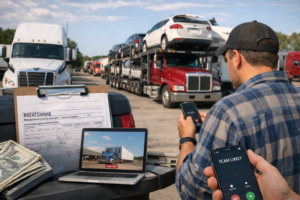
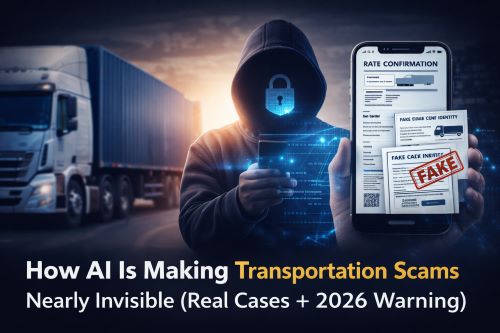
The truck arrived on time.
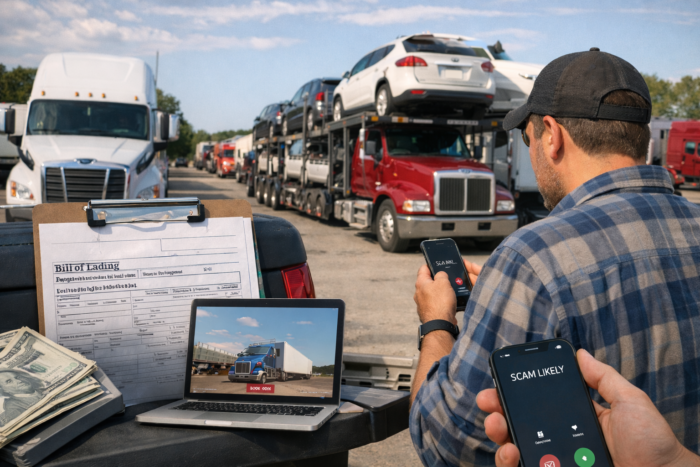
The documents looked perfect.
The driver sounded professional.
And yet — the load was never seen again.
This is no longer a rare story in the transportation industry. What’s changed isn’t just the volume of fraud — it’s how believable scams have become. Artificial intelligence has quietly removed the mistakes scammers used to make. No typos. No broken English. No suspicious gaps.
Welcome to the era of invisible transportation scams.
🧠 When Scams Stop Looking Like Scams
For years, fraud in transportation followed familiar patterns:
poorly written emails, mismatched documents, strange phone calls.
Experienced dispatchers knew what to look for.
That advantage is gone.
Today, scammers use AI to:
- Write flawless emails that sound exactly like real brokers
- Generate professional-looking carrier packets in seconds
- Create fake pickup confirmations that pass visual inspection
- Respond instantly with perfect industry language
The result?
Fraud that blends into everyday operations.
📦 Why Transportation Is the Perfect Target for AI Fraud
Transportation wasn’t built for this level of deception.
The industry runs on:
- Speed over caution
- Trust over verification
- Documents over behavior
- Phone calls over authentication
Add high-value cargo, tight deadlines, and fragmented systems — and AI finds the perfect environment to operate unnoticed.
Scammers don’t need to break locks anymore.
They just need to convince someone.
🤖 How AI Is Powering the Next Generation of Transportation Scams
🔹 AI-Generated Fake Carriers & Drivers
Fraudsters now create full carrier identities:
- Realistic company names
- Legitimate-looking emails
- Clean digital footprints
- Stolen or recycled MC numbers
Everything checks out — until it doesn’t.
🔹 AI-Forged Transportation Documents
AI can now generate:
- Insurance certificates
- Rate confirmations
- Bills of lading
- Pickup and delivery confirmations
These documents don’t look fake.
In many cases, they look better than real ones.
🔹 Perfect Communication, Every Time
AI removes the human errors investigators once relied on:
- No spelling mistakes
- No awkward phrasing
- No emotional tells
- Immediate, confident responses
If your team trusts professionalism as a signal of legitimacy, AI exploits that trust.
🔹 Voice Cloning: The Next Red Flag
Early cases already show AI-generated voices being used to:
- Impersonate dispatchers
- Confirm pickups
- Change delivery instructions
A phone call is no longer proof.
🚚 Real Cases That Show the Future Is Already Here
📌 Case 1: The “Legitimate” Pickup That Wasn’t
A high-value shipment was released to a driver who:
- Had correct paperwork
- Knew industry terminology
- Followed standard procedures
The carrier identity was fake.
The load vanished without force or alarms.
No hacking. No break-in. Just trust.
📌 Case 2: Load Diversion Through Document Manipulation
Scammers sent revised pickup instructions moments before arrival.
The documents looked authentic.
The warehouse complied.
The cargo was legally released — and illegally stolen.
📌 Case 3: Fake Carrier Onboarding
A fraudulent carrier passed onboarding using:
- AI-generated documents
- Clean-looking credentials
- Convincing communication
Fraud was discovered only after payment disappeared.
⚠️ Why Traditional Fraud Detection Is Failing
Most fraud prevention still relies on:
- Visual document checks
- Static databases
- Email and phone verification
- Human judgment under pressure
AI defeats all of these.
If your fraud detection depends on what looks right, it’s already outdated.
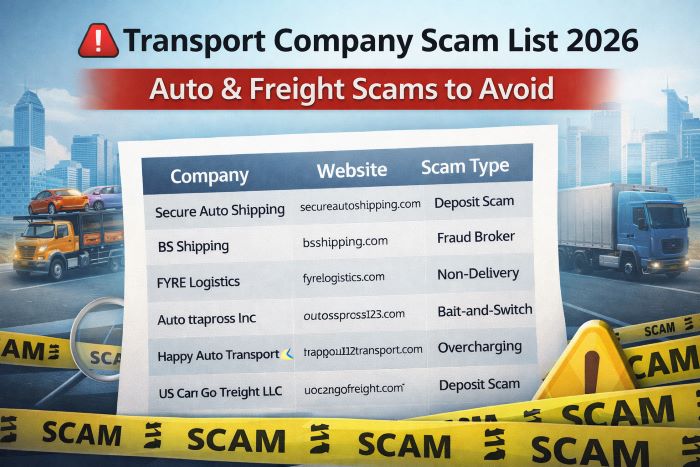
🔮 Will AI Make Freight Fraud Invisible in 2026?
The trend is clear:
- Scams will scale faster than teams
- Fraud rings will automate operations
- Small fleets and brokers will be primary targets
- AI-generated video and real-time impersonation will emerge
Fraud won’t disappear.
It will blend in.
🛡️ How Transportation Companies Can Fight Back
There is a path forward — but it requires change.
What actually helps:
- Multi-step carrier verification
- Out-of-band confirmations
- Behavioral pattern monitoring
- AI-powered fraud detection
- Industry-wide scam reporting
The key shift:
Stop verifying documents. Start verifying behavior.
✅ AI Freight Fraud Prevention Checklist (Free)
Before Releasing Any Load, Confirm:
⬜ Carrier identity verified via more than one source
⬜ Email domain matches official carrier records
⬜ Documents verified beyond visual inspection
⬜ Pickup changes confirmed via out-of-band contact
⬜ Phone confirmation not relied on alone
⬜ Behavioral patterns match past legitimate activity
⬜ No pressure tactics or urgency manipulation
Red Flags That Matter in the AI Era
- “Too perfect” documentation
- Instant responses at all hours
- Overly professional language without history
- Sudden routing or pickup changes
👉 Download the Checklist AI Freight Fraud Prevention Checklist
🚨 Why Reporting Scams Matters More Than Ever
AI thrives in silence.
Every unreported scam:
- Makes the next one harder to detect
- Helps criminals refine their methods
- Puts more carriers, brokers, and shippers at risk
Visibility is the strongest defense against invisible fraud.
📣 Call to Action
🚚 Seen something suspicious?
A carrier that felt “too perfect”?
Documents that looked right but ended wrong?
Report transportation scams anonymously at
👉 REPORT A SCAM
Your report could prevent the next loss.
Transportation professionals can report cyber-enabled scams through the FBI Internet Crime Complaint Center (IC3).
Frequently Asked Questions About AI Transportation Scams
How is AI used in transportation scams?
Scammers use AI to generate fake carrier identities, forged transportation documents, realistic emails, and even voice-cloned phone calls. These tools remove common red flags, making fraud harder to detect.
What are the most common AI-powered freight fraud tactics?
Common tactics include fake carrier onboarding, load diversion through forged pickup confirmations, AI-written impersonation emails, and document fraud involving insurance certificates and rate confirmations.
Why is freight fraud harder to detect today?
AI removes spelling mistakes, inconsistencies, and suspicious behavior. Fraud now looks professional, timely, and legitimate, causing traditional visual and manual checks to fail.
Will AI make transportation fraud worse in 2026?
Yes. Experts expect AI to enable scalable fraud operations, voice and video impersonation, and automated scam networks that blend seamlessly into daily transportation workflows.
How can transportation companies protect themselves from AI fraud?
Companies should use multi-step verification, behavioral analysis, out-of-band confirmations, AI-based fraud detection tools, and industry-wide scam reporting.