


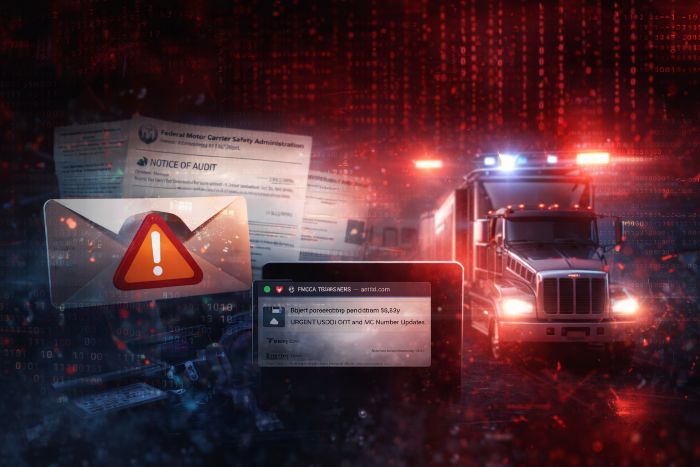
In January 2026, the Federal Motor Carrier Safety Administration (FMCSA) issued an urgent FMCSA Scam Alert warning about an alarming rise in fake FMCSA emails and phishing attacks targeting motor carriers and logistics companies. These scammers are impersonating FMCSA officials to trick businesses into providing sensitive information or clicking on dangerous links that could infect their systems with malware.
One motor carrier in Texas shared their story of receiving a fraudulent email that appeared to be from the FMCSA. The email claimed that their compliance documents were overdue and that they needed to act immediately to avoid a fine. The email even included a link to a website that looked just like the real FMCSA portal. Fortunately, the carrier was suspicious and decided to double-check the information, which led them to discover it was all part of a scam. By staying vigilant, they avoided a potential data breach and financial loss.
As a motor carrier, it’s crucial to stay on top of your compliance and safety regulations. However, a new threat has emerged in the form of FMCSA phishing scams, with fraudsters targeting companies like yours.
What makes these scams particularly dangerous is that they are designed to look legitimate. The emails use FMCSA logos and professional language, tricking even the most vigilant motor carriers. Clicking on a suspicious link or downloading an attachment could lead to data theft, malware infections, or even financial loss. Some scammers go as far as using spoofed email addresses, making it hard to distinguish between a real message and a scam.
Education is key to avoiding these scams. Make sure everyone in your company, from office staff to drivers, knows how to recognize phishing attempts and understands the importance of never sharing sensitive information unless they are sure of the source. Keeping your systems up to date with the latest security software and being cautious about sharing information online can further protect your business from these threats.
The FMCSA Scam Alert is a reminder that fraudsters are becoming more sophisticated, but with the right precautions, you can protect your business and avoid falling victim to these phishing schemes. Stay vigilant and ensure that your team knows how to verify official communications, so your motor carrier business remains secure.
Additionally, for more tips and updates on how to safeguard your operations, consider subscribing to our free newsletter. By signing up for our Newsletter, you’ll receive valuable insights and alerts directly to your inbox, keeping you informed on the latest threats and best practices for fraud prevention.
🚛 FMCSA Scam Alert: Protect Your Business from Fraudulent Emails and Phishing
These types of phishing scams are becoming more common, and fraudsters are getting better at making their fake emails look legitimate. The emails often use official FMCSA logos and language to convince recipients that they are from the government. Scammers may ask for personal information, like Social Security numbers, USDOT PINs, or driver’s license scans, or they might direct you to fake login pages where you’ll be asked to input sensitive data.
If you ever receive an email claiming to be from the FMCSA, it’s important to verify the sender’s email address. Official communications from the FMCSA will always come from an @dot.gov email address, so any email from a different domain should be treated with caution. Avoid clicking on any links or downloading attachments unless you are absolutely sure they are legitimate.
As a motor carrier, staying updated on FMCSA regulations and protecting your business from fraud is essential. If you suspect you’ve received a phishing email or have fallen victim to a scam, report it immediately. You can visit our Report a Scam page to share your experience and help us protect others in the industry.
To protect your business, always verify the sender’s email address before taking any action. Official communications from the FMCSA will always come from an email address ending in @dot.gov. Never click on any suspicious links or download attachments from emails you aren’t certain about. If you ever receive an email that seems questionable, it’s best to go directly to the official FMCSA website to verify any compliance requests or updates. If you receive a phishing email, report it immediately to the FMCSA at fraud@dot.gov.