



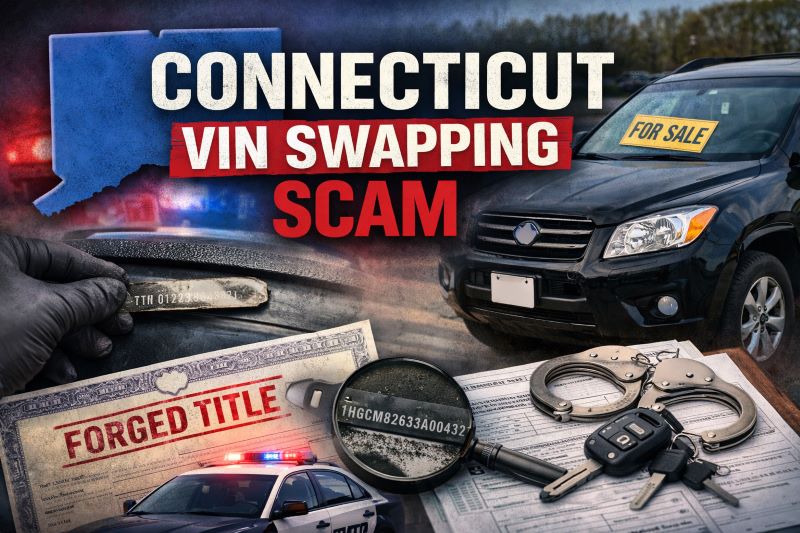
If you’re buying a used car in Connecticut, especially from a private seller on Facebook Marketplace, be careful—there’s a scam going around where stolen cars are made to look “clean.” In a recent Connecticut case, investigators said stolen vehicles were being traded or sold using changed VIN details and paperwork that looked real, so buyers thought they were getting a legit car.
The trick works because the car can look totally normal at first. In that Connecticut reporting, a buyer got suspicious after a trade and contacted police. Early checks didn’t instantly scream “stolen,” but later the vehicle was found to be stolen—showing why you shouldn’t trust just one quick VIN check. Related reads
Here’s what the scam usually means:
VIN swapping (or VIN cloning) is when criminals mess with the car’s identity. They change VIN stickers/plates or use VIN details from another similar car so a stolen car looks legit to the next buyer.
Title washing is when someone hides bad history on the title (like “salvage” or “rebuilt”) so the car can be sold for more money.
Sometimes scammers use both together, so the paperwork and the car seem to match—until you try to register it or police figure it out.
To verify use NMVTIS (National Motor Vehicle Title Information System)
Easy red flags (if you see these, be extra careful)
A price that’s way too cheap, a seller rushing you, “cash only,” refusing to share the VIN before meeting, refusing to meet somewhere safe (bank/DMV/police safe zone), or giving weird stories about how they got the car. If the title looks messy, the seller name doesn’t match the title, or they say “I lost the title but don’t worry,” that’s a big warning sign.
Simple checklist before you buy
First, check the VIN in more than one spot on the car and make sure it matches the paperwork. If anything looks tampered with, walk away. Then run a vehicle history report—but don’t treat it as perfect. After that, try to verify title history properly. Connecticut DMV points to NMVTIS as a system used to help verify title information and reduce fraud, and NMVTIS is designed to help prevent stolen cars from being resold.
Finally, do the deal safely: meet in a secure place, get a bill of sale, and if the car is expensive, get an inspection. VIN decoder / VIN check
If something feels “too lucky” or the seller is pushing hard—trust your gut and walk away.
FAQ: Connecticut Used-Car Scam (VIN Swapping + Title Washing)
1) What is VIN swapping (VIN cloning)?
It’s when scammers change or fake the car’s VIN details so a stolen car looks legal and sells like a normal used car.
2) What is title washing?
It’s when someone hides bad title history (like salvage/rebuilt) so the title looks “clean” and the car sells for more money.
3) Can a car look “clean” even if it’s stolen?
Yes. That’s why this scam works. In the Connecticut reporting, the vehicle didn’t look obviously stolen at first—so you should verify more than just one VIN check.
4) What are the biggest red flags when buying from a private seller?
Too-cheap price, seller rushing you, cash only, refusing to share the VIN early, refusing to meet at a safe public place, or paperwork that looks suspicious.
5) What’s the safest way to check a used car before buying?
Match the VIN in multiple places on the car, run a history report, and verify title history properly when possible. Connecticut DMV points to NMVTIS for title verification, and NMVTIS is meant to reduce title fraud and prevent stolen vehicles being resold.
If you think you’ve been targeted by a Connecticut VIN swapping / title washing scam, don’t ignore it. Save everything (screenshots of the listing, messages, VIN photos, title/bill of sale, and payment proof), then report it to local police and the Connecticut DMV so they can guide you on next steps and help stop the scam from hitting other buyers. If the deal happened online (like Facebook Marketplace), report the seller and listing on the platform too.