

Texas, USA | January–February 2026
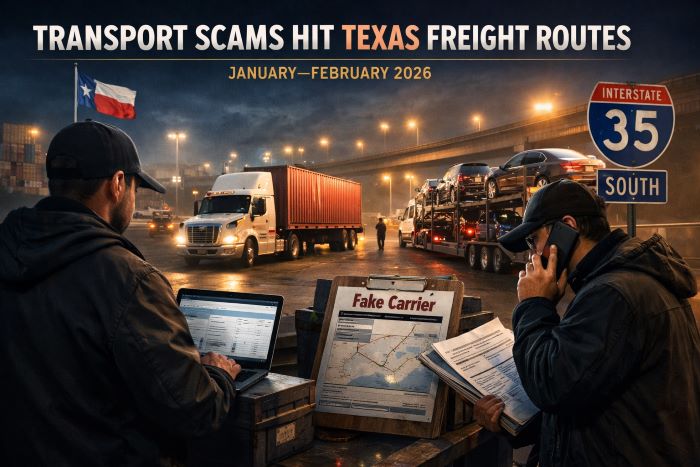
Transportation scams are rising sharply across the Southern United States, with recent cases in Texas freight corridors exposing how criminals are exploiting the logistics and auto transport industry.
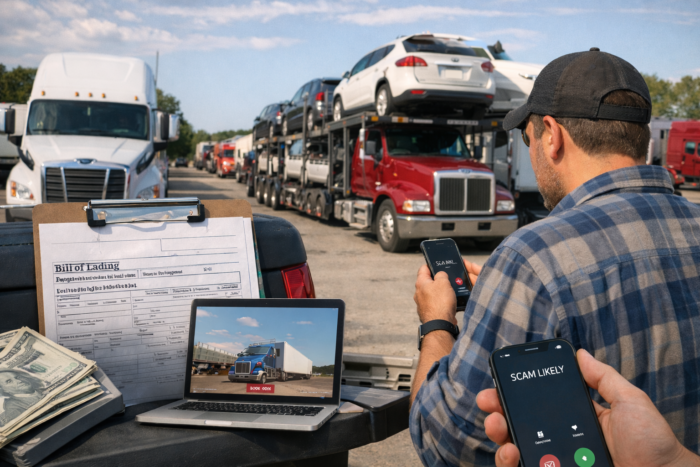
In late January 2026, a freight-related scam involving false carrier identities and diverted shipments resulted in nearly $40,000 in losses for a legitimate carrier operating along major Texas transport routes. Industry reports indicate scammers posed as authorized transport providers, rerouted cargo, and disappeared before payment could be recovered.
This type of fraud—commonly known as double brokering or strategic freight theft—has become one of the fastest-growing threats in the U.S. logistics sector.
FMCSA Issues Nationwide Fraud Alert
In response to increasing reports, the Federal Motor Carrier Safety Administration (FMCSA) released a fraud alert in mid-January 2026, warning carriers in Texas, Georgia, Louisiana, Florida, and other states about phishing scams and fake compliance notices.
According to FMCSA, scammers are impersonating federal officials to steal:
- Login credentials
- CDL and carrier details
- Registration and compliance fees
- For more details Click here
👉 Official alerts can be found on the FMCSA website
Auto Transport Scams Also Increasing
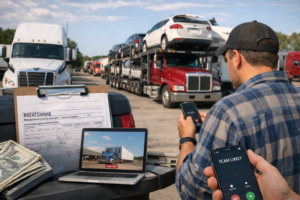
Alongside freight fraud, vehicle transport scams are affecting both U.S. and international customers. Fake auto transport brokers are collecting deposits online, issuing false pickup confirmations, and vanishing—leaving vehicles undelivered.
The Better Business Bureau (BBB) has warned consumers to verify transport companies carefully before making payments
Why the Southern U.S. Is a Hotspot
Experts say the South is heavily targeted because it handles a large share of U.S. freight traffic and relies heavily on digital booking systems. Major logistics hubs and long-haul routes make verification more challenging, creating opportunities for fraud networks operating across borders.
What Transport Companies and Customers Should Do
Authorities recommend:
- Verifying carriers through official databases
- Avoiding unsolicited emails claiming regulatory action
- Being cautious of unusually low transport quotes
- Confirming pickup and delivery details independently
A Growing Global Risk
While recent cases occurred in the Southern United States, transport scams increasingly affect international shippers, exporters, and vehicle buyers. As logistics goes digital, verification and awareness are now critical to preventing financial loss.