

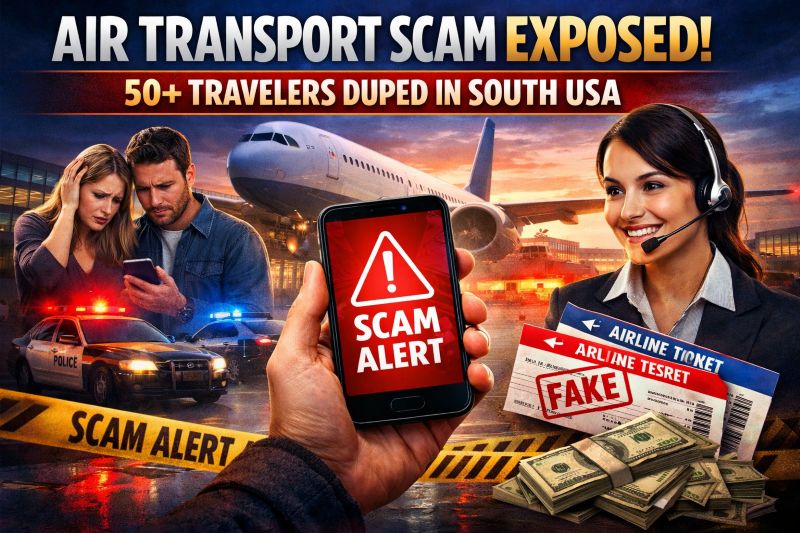
In January, what started as a routine flight disruption for several travelers flying out of the southern United States quickly turned into a costly air transport scam. Passengers departing from major hubs such as Miami, Houston, and Atlanta reported losing thousands of dollars after unknowingly interacting with fake airline customer service agents posing as official representatives.
According to multiple victim accounts, the scam unfolded after travelers searched online for airline support numbers following canceled or delayed flights. Instead of reaching legitimate airline staff, they were redirected to fraudulent phone numbers and fake booking pages designed to look identical to real airline websites. Once contact was made, scammers convinced victims that immediate payment was required to “reconfirm,” “rebook,” or “release” their tickets.
How the Air Transport Scam Played Out
In one reported case, a family traveling from Florida to Texas was told their tickets had been flagged due to a system issue. The fake agent offered urgent assistance but demanded payment through a non-standard method. Within minutes of payment, communication stopped. When the family later contacted the airline directly, they learned no issue had ever existed—and no payment had been authorized.
Federal consumer agencies have confirmed that airline customer service impersonation scams are increasing nationwide, with spikes around busy travel seasons. These scams often involve spoofed phone numbers, fake confirmation emails, and cloned airline portals that deceive even experienced travelers.
🔗 External reference: U.S. Federal Trade Commission warning on airline impersonation scams
Why Southern U.S. Airports Are Being Targeted
Experts say the southern U.S. is particularly vulnerable due to high passenger volume, frequent weather disruptions, and heavy reliance on online rebooking tools. Scammers take advantage of urgency—when travelers are stressed, rushed, and searching quickly for help.
Cybersecurity analysts note that scammers often use paid ads and manipulated search results to place fake airline support pages above legitimate links, making it easy for victims to click without realizing the deception.
🔗 External insight: Airline fraud trend analysis
A Growing Pattern of Air Transport Fraud
Authorities say these incidents are not isolated. Similar air transport scams involving fake tickets, rebooking fraud, and impersonated airline agents have been reported across multiple southern states. Victims often discover the fraud only when they arrive at the airport—or when their bank flags suspicious transactions.
This case reflects a broader trend documented in recent transport scam investigations, where digital convenience is being weaponized by organized fraud networks.
🔗 Internal reading: Related cases are tracked in our Air Transport Scam Alerts section:
What Travelers Should Know Going Forward
As air travel becomes more digital, experts warn that verification is now as important as booking itself. Legitimate airlines do not demand payment via unconventional methods, and official support channels should always be accessed directly from airline websites—not search ads or social media messages.
Travelers who believe they’ve encountered an air transport scam are urged to report it promptly. Early reporting helps authorities identify patterns and prevent repeat victims.
👉 Report your experience here
❓ Frequently Asked Questions (FAQ)
Are air transport scams increasing in 2025–2026?
Yes. Consumer protection agencies report a rise in airline impersonation scams as scammers exploit digital booking systems, flight disruptions, and online customer service searches. These scams are becoming more sophisticated and harder to detect.
How did the air transport scam in the South USA work?
In this case, scammers targeted travelers searching online for airline support after flight delays or cancellations. Victims were redirected to fake customer service numbers or look-alike airline websites, where they were asked to pay urgent fees for rebooking or ticket confirmation. The payments went directly to fraudsters.
Which travelers are most at risk of airline scams?
Travelers booking last-minute flights, dealing with flight disruptions, or searching for airline support through search engines or social media are most at risk. Busy airports in the southern United States are frequent targets due to high passenger volume.
How can I tell if airline customer service is fake?
Red flags include requests for payment via gift cards, wire transfers, or cryptocurrency, pressure to act immediately, and email addresses or phone numbers not listed on the airline’s official website. Legitimate airlines do not ask for sensitive information through unsolicited calls or messages.
What should I do if I’ve been a victim of an air transport scam?
Stop all communication immediately, contact your bank or card provider, gather all evidence (emails, receipts, phone numbers), and report the incident to consumer protection authorities. You should also submit a report on TransportScammers.com to help warn others.