



If you live in the U.S., chances are high you’ve already seen it:
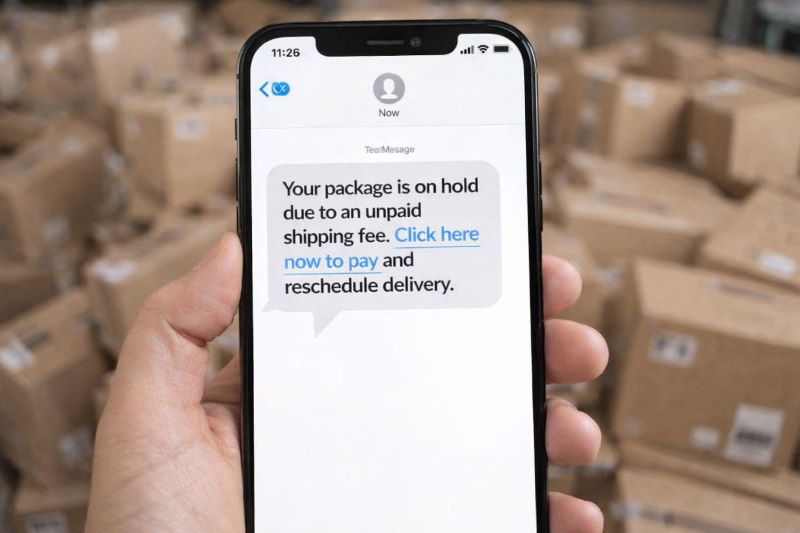
“Your USPS / UPS / FedEx package is on hold due to an address issue. Click here to fix it.”
These messages look urgent. They arrive when you’re actually waiting for a delivery. And that’s exactly why they work.
Americans are being flooded with fake package delivery text scams, also known as smishing (SMS phishing). Criminals pretend to be trusted carriers like USPS, FedEx, and UPS to steal personal information and money — sometimes hundreds of dollars at a time.
Why These Package Delivery Text Scams Work So Well
Online shopping has exploded. Most people are expecting a package at any given moment. Scammers take advantage of that timing.
They send texts claiming:
- Your package couldn’t be delivered
- There’s a problem with your address
- Extra postage is required
- Delivery needs to be rescheduled
The message usually includes a link that leads to a very realistic-looking website using official logos, fake tracking numbers, and convincing language.
Victims are then asked to:
- Confirm their address
- Enter personal details
- Pay a small “redelivery” or “processing” fee
One person who contacted the AARP Fraud Watch Network paid just 99 cents — and later discovered $400 had been charged to their card.
The Scale of the Problem Is Massive
According to the Federal Trade Commission (FTC), Americans reported $470 million in losses from text-message scams in 2024, nearly $100 million more than the year before.
And that’s only what’s reported. Most scam victims never file a complaint.
👉 The most commonly reported text scam? Fake package delivery messages.
SOURCE : FTC Consumer Fraud Data
How Scammers Use Your Information
Even when victims don’t lose money immediately, the damage isn’t over.
Cybercrime experts explain that scammers often:
- Sell stolen personal data to other criminals
- Use your info to target you again later
- Build trust by referencing real details about you
Once they have your name, phone number, address, or card info, future scams become far more convincing.
Clear Warning Signs a Delivery Text Is Fake
Here’s how to spot these scams quickly:
🚩 You never signed up for tracking alerts
The U.S. Postal Service does not send unsolicited tracking texts unless you specifically requested them.
Source: USPS Inspection Service – https://www.uspis.gov
🚩 Poor grammar or strange formatting
Misspellings, odd phrasing, or excessive punctuation are classic red flags — though newer scams may look more polished.
🚩 Requests for payment or personal data
FedEx and UPS clearly state they do not ask for personal or payment information via random texts.
FedEx fraud info: https://www.fedex.com/en-us/trust-center.html
UPS fraud alerts: https://www.ups.com/us/en/support/shipping-support/legal-terms-conditions/fraud-alert.page
🚩 Missing or unverifiable tracking numbers
If a message mentions a package but can’t provide a valid tracking number you can confirm on the carrier’s real website, it’s almost certainly fake.
How to Protect Yourself From Package Text Scams
Follow these simple rules:
- Never click links in unexpected delivery texts
- Manually visit the carrier’s official website (usps.com, ups.com, fedex.com)
- Copy and paste tracking numbers into the real site instead of clicking links
- Never enter personal or payment details unless you’re 100% sure the request is legitimate
When in doubt, go directly to the source — not through the text message.
Where to Report Fake Delivery Texts
Reporting helps stop scam networks and protect others.
- USPS scams: email screenshots to
spam@uspis.gov - UPS scams: report to
fraud@ups.com - FedEx scams: report to
abuse@fedex.com - All smishing scams: file a report at the FBI’s IC3 → https://www.ic3.gov
You can also contact the AARP Fraud Watch Network Helpline at 877-908-3360 for free guidance and support.
If a text message claims there’s a problem with your delivery and pushes you to act fast — slow down.
Scammers rely on urgency, fear, and convenience. Taking a few extra seconds to verify can save you money, identity theft headaches, and long-term damage.
If you’re unsure, assume it’s fake until proven otherwise.
Staying alert is the best delivery protection you have.
Related : Transport Scams
Top 5 FAQ :
1) Why am I getting delivery scam texts even when I didn’t order anything?
Scammers send millions of texts randomly, hoping someone is expecting a package and clicks in a hurry.
2) How do I quickly know if a USPS/UPS/FedEx text is fake?
If you didn’t sign up for tracking alerts, and the text pushes a link or asks for money/info, it’s almost always a scam.
3) What happens if I click the link but don’t pay?
They can still collect details you type in, track your device, or use it to target you with more scams later.
4) What should I do if I already paid a “redelivery fee”?
Call your bank/card company immediately, block the card if needed, save screenshots, and report the scam.
5) Where do I report delivery scam texts?
USPS : mailto:spam@uspis.gov, UPS: mailto:fraud@ups.com, FedEx : mailto:abuse@fedex.com, FBI : https://www.ic3.gov/