



Every driver in the United States who uses toll road payment scam should be aware of a rapidly escalating scam trend in 2025–2026: fraudulent toll payment texts and fake toll charges designed to steal money and personal data. These scams are spreading coast-to-coast, and they’re tricking thousands of people every month — especially in areas with heavy toll road usage.
While the most recent official news about toll scams in January 2026 hasn’t yet been reported by major U.S. outlets, consumer protection agencies and cybersecurity researchers continue to warn drivers about text message phishing campaigns and fraudulent payment sites. These schemes — often referred to as “smishing” (SMS phishing) — mimic legitimate toll road operators like E-ZPass, SunPass, FasTrak, Peach Pass and others, with the goal of getting you to pay fake outstanding tolls or hand over sensitive information.
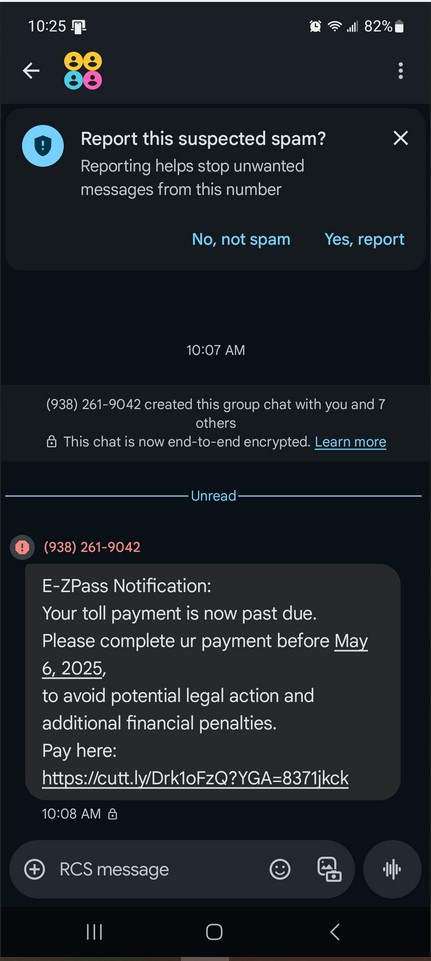
In these scams, you might receive a text that looks convincing and official, claiming:
- “You owe $12.50 in unpaid tolls — click here to pay now to avoid penalties.”
- “Your toll balance is overdue. Pay by this link to avoid late fees.”
When drivers click the link, they’re sent to a fake website that harvests credit card numbers, login details and even identity information — often without ever delivering a real toll payment to a legitimate toll agency.
Sample Toll Road Scam Text :
📈 Surge in Toll Road Text Scam Activity
According to analysis from cybersecurity reports and consumer agencies:
- Toll payment scam texts grew significantly in 2025, with some states reporting huge increases in unsolicited “unpaid toll” messages.
These scams are not random — they’re structured to look like urgent messages from official toll agencies, and many include convincing branding or spoofed sender names to make them seem legitimate.
Cybersecurity experts have even traced some of these phishing campaigns to advanced SMS scam tools used by international crime groups.
🚗 Why Drivers Fall for These Scams
- Urgency and Fear of Penalties — Messages imply you’ll face fines if you don’t pay immediately.
- Familiarity — Most Americans have used systems like E-ZPass or SunPass, so the alert feels real.
- Low Amounts — Scammers often ask for small amounts (e.g., $5–$15) that people will pay without much thought.
These psychological triggers make even savvy users act fast — which is exactly what scammers want.
📲 Common Toll Scam Tactics
Smishing Toll Scams generally include:
✔ Fake “unpaid toll” text messages.
✔ Links to look-alike payment portals that ask for financial info.
✔ Emails or SMS that spoof official toll agency branding.
✔ Messages urging payment to avoid late fees or suspension.
🛡️ How to Protect Yourself
To avoid becoming a victim of these scams:
✔ Don’t click on links in unsolicited toll payment texts or emails.
✔ Always verify directly through your official toll account or mobile app.
✔ Contact the toll agency’s customer support using numbers from their official website, not the text.
✔ Report the Scam to Law Enforcement. If you suspect a text message is a scam, report it to the Internet Crime Complaint Center (IC3) at www.ic3.gov.
✔ Delete the message immediately once you’ve confirmed it’s fake.
Report the scam message to our team and we’ll publish alerts for your state.
Many legitimate toll agencies do not send payment requests via SMS or email — especially not with links to enter sensitive information. If in doubt, go directly to the official toll authority’s portal by typing it into your browser.