

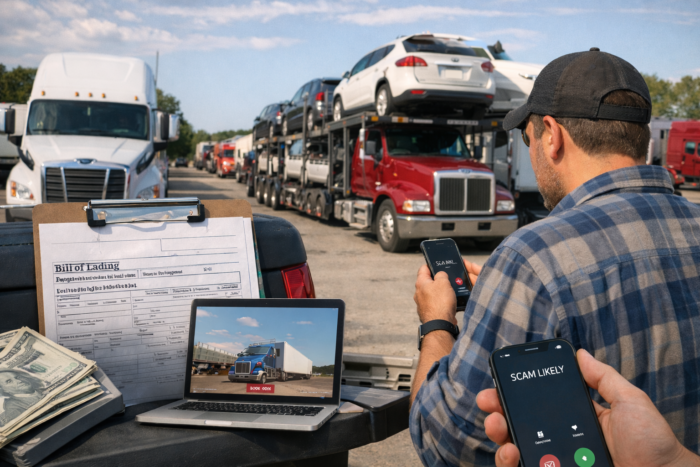
Transport and logistics scams are becoming a serious problem across the Southern US in 2026. From Texas to Florida and neighboring states, more individuals and businesses are falling victim to fraud involving trucking, freight, and vehicle transport services.
What makes these scams dangerous is how real they look. Many scammers now use stolen company details, professional-looking websites, and fake documents to appear legitimate.
Table of Contents
What’s Happening on the Ground Southern US in 2026
Southern states play a major role in U.S. transportation and shipping. Texas alone handles a massive share of freight movement, which makes it an attractive target for criminals.
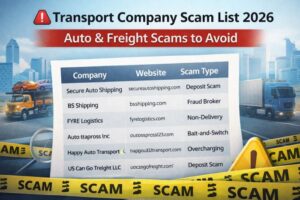
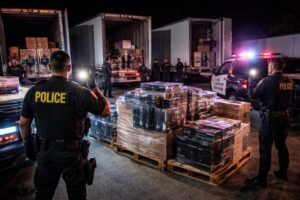
Scammers often pretend to be registered trucking companies or auto transport providers. They accept shipping jobs, collect payments, or take control of cargo — and then disappear. In other cases, real shipments are picked up but diverted and stolen before reaching their destination.
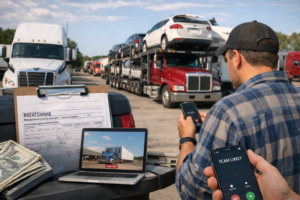
Vehicle buyers are also being targeted. Fake auto transport companies promise quick delivery at low prices, request upfront payments, and then cut off all contact.
Common Transport Scams to Watch Out For
Some of the most reported transport scams include:
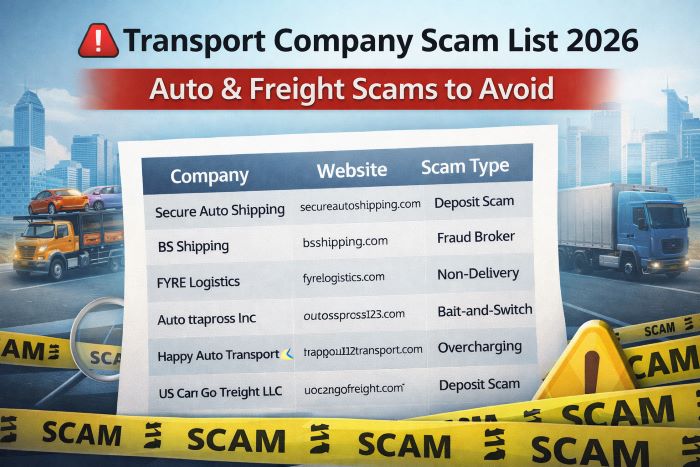
- Fake trucking carriers using stolen DOT or FMCSA numbers
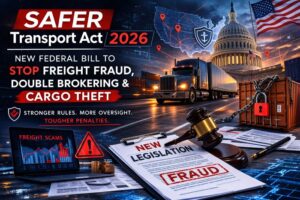
- Freight theft through diverted or rerouted shipments
- Vehicle shipping scams involving upfront deposits
- Impersonation of real logistics companies
- Fake transport brokers operating online
The Federal Motor Carrier Safety Administration (FMCSA) has warned that identity theft within the trucking industry is increasing rapidly.
🔗 https://www.fmcsa.dot.gov/protect-your-move
Why These Scams Are Growing
Experts say transport scams are increasing for several reasons:
- More shipping and booking is done online
- High demand creates rushed decisions
- Limited background checks by customers
- Easy access to stolen business identities
According to the U.S. Federal Trade Commission (FTC), vehicle-related and transportation fraud continues to cause significant financial losses each year.
🔗 https://www.consumer.ftc.gov/scams
The Real Cost for Victims
Transport scams don’t just cause financial loss. Victims also deal with delays, stress, insurance disputes, and damaged business relationships. For small businesses and independent buyers, a single scam can cause serious setbacks.
Industry analysts estimate that transport and logistics fraud costs millions of dollars annually in the United States, with Southern states reporting a growing share of cases in 2026.
How to Protect Yourself
While scammers are getting smarter, there are still ways to stay safe:
- Verify carriers using the official FMCSA database
🔗 https://safer.fmcsa.dot.gov - Be cautious with large upfront payments
- Watch for pressure tactics or rushed deals
- Confirm company contact details independently
- Research the company name plus “scam” before paying
- Read this immediately
Final Thoughts
Transport scams are now one of the fastest-growing fraud categories in the U.S., especially in the Southern region. Awareness, verification, and patience remain the best defenses.
If a transport deal feels suspicious, it’s better to pause and verify than risk losing money or cargo.
Frequently Asked Questions About Transport Scams in Southern US 2026
What transport scams are most common in the Southern US 2026?
In the Southern US 2026, the most common scams include fake trucking carriers using stolen DOT numbers, freight theft through diverted shipments, vehicle transport scams requesting upfront deposits, and fraudulent online transport brokers.
Why are transport scams increasing in the Southern US 2026?
Transport scams are rising in the Southern US 2026 due to increased online booking, high freight demand, rushed business decisions, and easier access to stolen company identities. Criminals are taking advantage of digital systems and limited background checks.
How can I verify a trucking company in the Southern US 2026?
You can verify a trucking company by checking its USDOT and MC numbers in the official FMCSA SAFER database (safer.fmcsa.dot.gov). Always confirm contact details independently and review company history before making payments.
Are vehicle shipping scams common in the Southern US 2026?
Yes, vehicle shipping scams are increasingly reported in the Southern US 2026. Scammers often advertise low prices, request large upfront deposits, and then disappear without transporting the vehicle.
What should I do if I become a victim of a transport scam in the Southern US 2026?
If you suspect fraud in the Southern US 2026, immediately report it to the FMCSA, the Federal Trade Commission (FTC), and your local law enforcement agency. You should also notify your bank, insurance provider, and any affected business partners to minimize losses.